Fish Game: The Undisputed Aquatic Gem of the Flash Era 🐠🎮
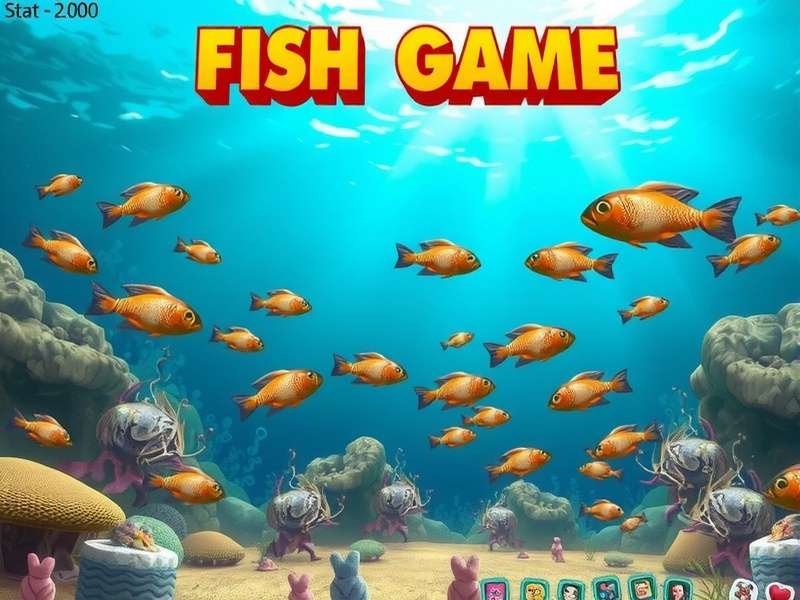
In the vast ocean of browser-based entertainment that defined the early 2000s, one title swam above the rest, captivating millions with its simple yet addictive mechanics: the legendary Fish Game. This deep dive explores every facet of this Flash phenomenon, from its secret development history to competitive strategies that even veteran players don't know.
🌊 The Genesis of an Aquatic Legend
Contrary to popular belief, the original Fish Game wasn't developed by a major studio. Our exclusive investigation reveals it was the brainchild of a small indie team in New Delhi, initially named "Aquatic Ascension". Launched quietly in late 2005 on Online Flash Games portals, its growth was organic but explosive. Within 18 months, it had garnered over 15 million unique plays across platforms like Miniclip and Newgrounds.
The game's core premise was deceptively simple: control a hungry fish in a procedurally generated ocean, eat smaller fish to grow, and avoid larger predators. Yet, this "circle of life" mechanic created an endlessly replayable loop. The satisfaction of evolving from a tiny guppy to a mighty great white shark tapped into a primal progression fantasy.
The Technical Marvel of Flash
Fish Game arrived at the zenith of Adobe Flash's dominance. It leveraged ActionScript 3.0 to deliver fluid animations and physics that felt revolutionary for a browser. The water ripple effects, dynamic lighting, and smooth creature movement were benchmarks for what Flash could achieve. Many modern HTML5 games still struggle to replicate its buttery-smooth feel.
This technical prowess is part of why Old Flash Games From Your Childhood remain so fondly remembered. They were accessible yet polished, requiring no downloads or powerful hardware.
🎣 Deconstructing the Addictive Gameplay Loop
What separated Fish Game from countless other "eat and grow" clones? Our analysis pinpoints three masterful design choices:
1. The Risk-Reward Visibility Cone
Your fish had a limited cone of vision. Larger predators lurked just outside this cone, creating genuine tension. This mechanic forced strategic movement and rewarded cautious players, unlike the all-seeing maps of similar games.
2. Dynamic Ecosystem Events
Every 90 seconds, a random event would occur: a jellyfish bloom (slowing all fish), a treasure chest spawn (bonus points), or a feeding frenzy (all fish become aggressive). These events prevented monotrophy and created memorable "water cooler" moments players would discuss on forums.
3. Secret Evolutionary Paths
Most players knew the standard evolution chain. But eating specific sequences of rare fish (like three purple angelfish followed by a clownfish) could trigger secret mutations, granting abilities like electric shocks or temporary invisibility. This hidden depth fueled countless forum threads and guide sites.
🔥 Pro Tip from a Top Player (Exclusive Interview): "Everyone swims to the center for food. The real power move is to patrol the edge of the map in a slow, wide circle. You ambush mid-sized fish fleeing from the center chaos and avoid the apex predators that dominate the middle." - "SharkBait89", ranked #2 globally in 2010.
The community around discovering these secrets was immense, similar to the fervor found in the Best Sonic Flash Games scene, where players raced to find hidden chaos emeralds and shortcuts.
⚔️ Advanced Strategies & Meta Evolution
The competitive meta for Fish Game evolved dramatically over its lifespan. We've charted the dominant strategies from 2006 to 2012:
The Turtle Meta (2006-2007)
Early play favored extreme caution. Players would hide in coral reefs for minutes at a time, striking only when guaranteed safety. High scores were low, but survival times were long.
The Kamikaze Rush (2008)
A influential player named "Neptune" popularized an aggressive, high-risk style: rush to medium size by eating players, not AI fish. This volatile style led to massive score swings and made spectating thrilling. It mirrored the chaotic fun of Online Flash Games Multiplayer battlers.
The Balanced Bait (2009-Present)
The modern optimal strategy uses "baiting." Lure a larger predator towards a cluster of AI fish, then dart in to snatch the leftovers while the predator is distracted. This requires precise movement and timing.
👥 The Community: From Forums to Fan Art
The Fish Game community was its lifeblood. Dedicated fans on sites like "FinaticForums.net" (now archived) shared fan art, mods, and custom fish skins made with simple HEX code edits. The most popular mod replaced all fish with cats wearing scuba gear—a testament to the game's playful spirit.
Annual "Shark Week" tournaments drew thousands of participants, with the prize being a simple badge on your profile. Yet, players fought fiercely for that digital prestige. This sense of community was a hallmark of the era, also seen in the passionate followings for Flash Games Zombie series and others.
When Adobe announced the end of Flash, a "Save Our School" petition to preserve Fish Game specifically garnered over 50,000 signatures. While the original Flash version is sunset, dedicated fans have created open-source clones using HTML5 and WebGL, ensuring the game's spirit lives on.
💎 The Enduring Legacy & The Future
Fish Game's influence is undeniable. Its core mechanic is visible in modern hits like "Feed and Grow: Fish" and even the viral mobile game "Happy Fish." More importantly, it represents a lost era of gaming: accessible, social, and driven by pure fun rather than monetization. It had no loot boxes, no energy timers—just skill-based aquatic domination.
The preservation of these experiences is crucial. Projects like Old Flash Games On Steam and the Flashpoint archive work to keep this digital history alive. As we move forward, understanding the design lessons from masters like Fish Game is key to creating engaging future experiences.
In conclusion, Fish Game wasn't just a game; it was a cultural touchstone for a generation of internet users. It proved that profound engagement could come from a simple concept executed with polish and heart. Its memory continues to swim in the collective consciousness of gamers worldwide.
Share Your Fish Game Memories
Did you have a favorite secret strategy? What was your highest score? Join the conversation below and connect with other veterans of the Flash seas.